Why Specifications Matter
If you've started looking into Structural Insulated Panels (SIPs) in the UK, you've probably noticed there are dozens of different options. Every provider claims to be "market-leading" or "50x stronger than traditional," with U-values that seem almost too good to be true. It can be confusing, so it helps to focus on the specifications that really matter when choosing panels for your next build.
If you're planning a new home, our SIP Homes page showcases examples of high-performance projects and the types of panels we use.
Testing and Accreditation
The first thing to check is third-party certification. A British Board of Agrément (BBA) certificate is usually the minimum requirement for insurers, warranty providers, and lenders. It shows the panels have been rigorously tested and are suitable for their intended use. Fire test data is also important — it gives confidence that the panels perform as expected in real-world conditions.
Always ask your provider for this documentation and confirm it relates to the exact SIP panels being supplied. For more on our approach to quality and compliance, visit our SIP Fabrication and Supply page.
Panel Thickness and Insulation Type
Most SIPs in the UK use either EPS (Polystyrene) or PU (Polyurethane) insulation cores. EPS panels are lighter and cheaper, but to match the same strength and thermal performance as PU, they usually need to be thicker. PU panels tend to perform better over longer spans and offer higher insulation values.
Panel thickness affects both structural strength and thermal performance, so the right choice will depend on your project, the spans you need, and your energy performance goals. Check out our SIP Panels supplied by McVeigh page to see how we cut and prepare panels for different builds.
Facing Materials and Panel Sizes
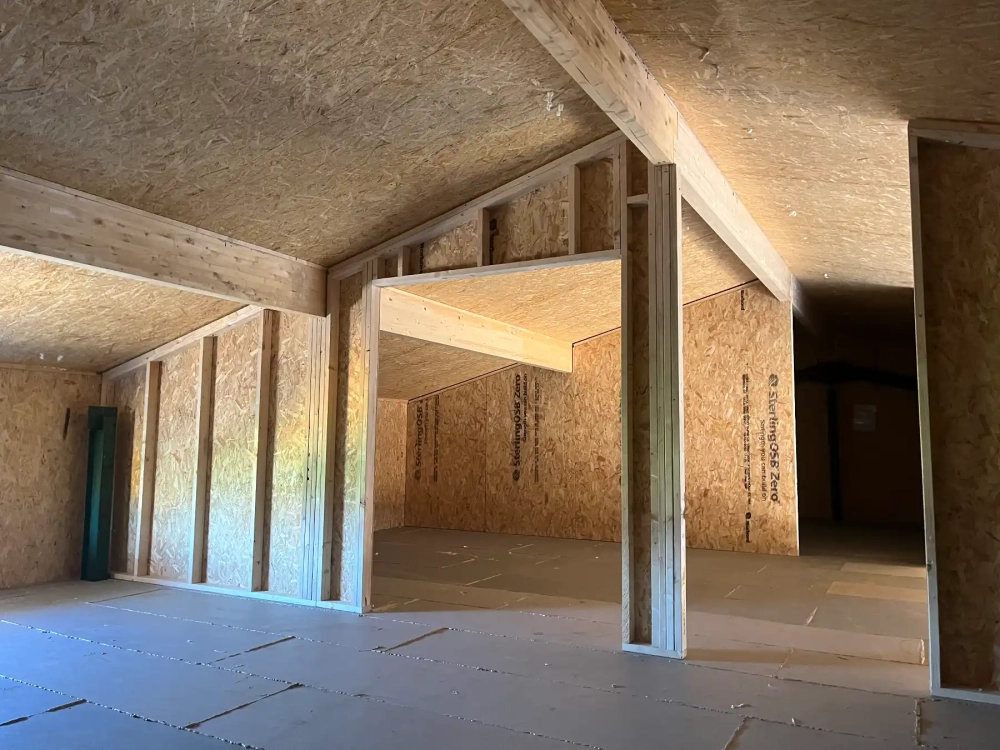
SIPs are usually faced with OSB boards, which vary in thickness. Thicker boards provide better support for brick ties, cladding, or internal fixings. In some cases, panels may include fire-resistant boards for enhanced protection.
SIPs can be supplied in standard widths, but most providers will cut them to suit your project. Residential and commercial panels can go up to 7.5 metres, making them ideal for walls and roofs with fewer joins. For guidance on on-site assembly, visit our SIP Construction page.
Thermal Bridging
One of the biggest advantages of SIPs is their ability to minimise thermal bridging. Timber inserts are still required at key points, such as bases, heads, and over openings, but insulated splines between panels reduce timber content. Compared to traditional timber frame walls, SIPs generally have fewer thermal bridges, improving overall energy efficiency.
Use this link for find out
What is Thermal Bridging?
Back-Up and Support
A good SIP provider should offer more than just panels. Look for guidance on:
Support from the start of your project makes a big difference in confidence and build quality. At McVeigh Offsite, we combine technical guidance with practical experience to help projects run smoothly.
McVeigh Offsite Expertise
We've been working with SIP homes and offsite construction for years. We supply, precision-cut, and deliver panels across the UK, tailored to suit any build — from self-build homes to larger residential developments. Our team works closely with builders, architects, and designers, offering advice and technical support at every stage.
Explore our SIP Homes, SIP Fabrication and Supply, and SIP Construction pages to see how we make projects faster, more efficient, and consistently high quality.
Conclusion
Choosing the right SIP comes down to:
- Checking accreditations and fire performance
- Understanding panel thickness, insulation type, and facing materials
- Considering thermal bridging and build efficiency
- Working with a supplier that offers guidance and technical support
By asking the right questions and reviewing documentation carefully, you'll ensure your SIP project is delivered efficiently, meets energy standards, and results in a high-quality finish.